
For travellers planning Chongqing, pair this recovery guide with the timing guide, the stay hub, and the Baihong river-view comparison so the first hour after arrival is supported by the right location and the right room.
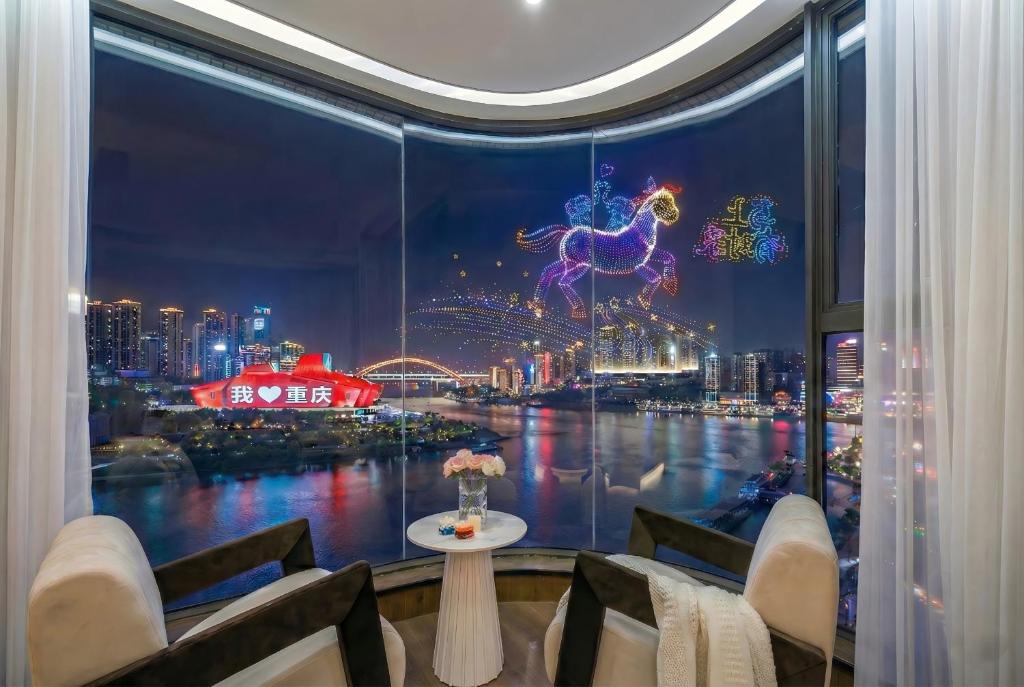
The city is still warm outside. Inside, the body needs a slower system.
Many people think travel recovery means getting into bed as quickly as possible and falling asleep immediately. But what often keeps the body restless is not a lack of sleepiness. It is the fact that the nervous system is still moving, judging, scanning, and staying alert. Flights, taxis, check-in counters, unfamiliar rooms, overhead lighting, screens, and conversation all keep the mind active long after the journey has technically ended.
That is why, in a river-view setting like Baihong, we care so much about the first hour after arrival. It is not empty time. It is a transition zone between urban stimulation and physical recovery. When that transition is handled gently, the quality of sleep, emotional stability, and even the next morning’s clarity can change in meaningful ways.
01. Travel fatigue is not only tiredness. It is a nervous system that is still working.
After prolonged movement, many people experience the same contradiction: the body feels heavy, but the mind still feels bright. You want to scroll for a while, look out the window, reorganize your bag, and only then admit that you are exhausted. What feels like insomnia is often unresolved sensory activity. The system is still reading the room, measuring safety, and processing what the day has not yet released.
YOJQI is designed for this unfinished stage. Not to overpower fatigue with more stimulation, and not to turn recovery into theatrical wellness, but to offer lower-intensity, more concrete feedback through touch and scent. The goal is simple: to help the body understand that vigilance is no longer required, and that rest can begin.
02. Why scent and touch work better than more instructions
In the first hour after check-in, the most effective interventions are rarely the most complicated ones. Two direct entrances matter more: what the hand can feel, and what the nose receives first. The 18mm herbal core offers a weight the palm can remember. The 6mm pivot keeps movement steady and restrained. It does not ask you to believe in a system. It only asks the fingers to repeat a slower pattern until the mind starts following.
At the same time, scent works differently from vision. It does not require interpretation before effect. It reaches breathing, mood, and rhythm earlier than analysis does. When tactile and olfactory feedback both become slower, more precise, and more repeatable, the brain is better able to step out of daytime overactivity. That is why YOJQI keeps returning to the idea of a physical anchor: recovery begins in what can actually be felt.
03. How recovery should happen inside a Baihong room
What makes the Baihong environment especially suitable is that it does not demand immediate excitement. At night, the river view, window light, softer illumination, and relative quiet naturally create a slower backdrop. A YOJQI object in this space is not there to decorate the room. It is there to translate the room’s atmosphere into something the body can physically follow.
The ideal state is not instant sleep. It is a short but stable decompression ritual: phone down, body seated, fingers moving, breath slowing, scent entering the room. It may only take ten minutes, but it can change the internal message from “I am still in transit” to “I have arrived.”
Leave a Reply