
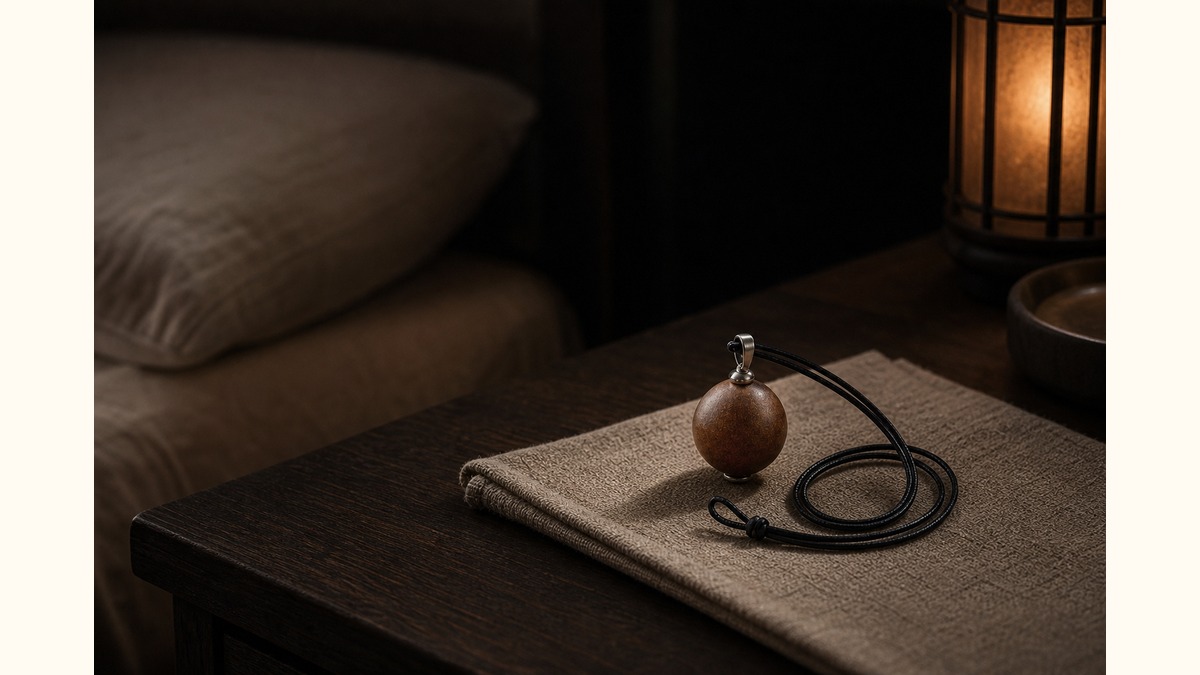
Sleep Recovery / Night Threshold
This page slows the pattern down so the user can see the missing threshold between daytime stimulation and night recovery.
Chinese version: 为什么我总在凌晨三点醒来?
- Problem
- Recovery
- Ritual
- Collection
- Product
What The User Is Feeling
There is a particular frustration in waking up at 3AM. It is not morning. It is not a clean, intentional start to the day. It is a strange middle place where the room is dark, the body is tired, but the mind is suddenly alert enough to notice itself.
Some people wake with thoughts already moving. Others wake with a vague sense of pressure, heat, restlessness, or unfinished tension. And once awake, they become too aware of the fact that they should be asleep.
This pattern can feel especially discouraging because it is repetitive. When it happens once, it is an inconvenience. When it happens often, it starts to shape your relationship with night itself.
The important thing to understand is that middle-of-the-night waking is rarely just a night problem. It is often the nighttime expression of a day that never fully settled.
Why It Happens
There are many possible reasons people wake in the early hours, and persistent sleep problems deserve proper care when needed. But for many modern adults, one of the biggest patterns is simple: the body went still before the system finished winding down.
1. The day ended physically, but not mentally
You stopped working, but work did not stop inside you. Messages, mental replay, unresolved conversations, and screen exposure can leave the mind lightly activated long after the official day is over.
2. Evenings are filled with stimulation, not descent
A lot of modern evenings are built around brightness, input, speed, and emotional carryover. Fast scrolling, loud shows, late food, task-switching, and doom-checking all tell the body to remain partially outward-facing.
3. Sleep begins without a clear threshold
Many people try to fall into sleep from a state of mild overstimulation. Sometimes they succeed for a few hours. But the system has not truly landed, so it rises again later in the night.
4. Stress becomes visible at night
What is tolerated during the day often becomes visible at night. In daylight, activity can cover strain. At 3AM, there is less distraction. The body notices what it could postpone before.
This does not mean every 3AM waking has the same cause. It means the pattern often makes more sense when viewed through rhythm, carryover, and recovery quality instead of only through a single sleep hack.
An Eastern Perspective
Traditional Eastern thought often treats nighttime as a process of inward gathering. Night is when the system is meant to become less dispersed. Attention narrows. Activity softens. The body is allowed to stop projecting itself outward.
When that inward movement does not happen cleanly, sleep may begin but not hold. That is why evening practices matter. Not because they are mystical, but because they teach the body how to arrive.
A quieter room, a slower breath, a scent that stays close to the body, and a repeated action before bed can help transform sleep from collapse into return.
A Small Recovery Practice
- Reduce the room. Lower one light, silence one source of notification, and let the visual field become simpler.
- Keep one object or sensation consistent each night: tea warmth, clean hands, slow breathing, or a close-range scent near the body.
- Exhale longer than you inhale for five rounds. Let the body feel that it is not being asked to perform anything.
- Before lying down, say one closing sentence: The day is finished. I do not need to keep carrying it.
- If you wake in the night, do not immediately chase sleep. First soften the body. Then breathe. Then let the room remain low-stimulation.
This will not solve every sleep issue instantly. But it helps rebuild the missing threshold between the outer day and the inner night.
Rebuild The Night Threshold
Related Reading
For the broader pattern behind persistent fatigue, read Why Am I Always Tired?.
For the practice layer, continue with Evening Ritual.
For the product and collection layer tied to sleep recovery, continue with Ruihe | Sleep Recovery Collection.
Start With Ruihe
If your night feels under-protected rather than simply under-scheduled, begin with the Ruihe bracelet or the Ruihe pendant.
Leave a Reply